Crochet Gauge: Why and How to Make Them?
Whether you're just starting out or already have a few projects under your belt, you've surely heard of the famous « gauges ».
Often overlooked, this element can nevertheless make all the difference in your crochet creations.
Perhaps you think making a swatch is a waste of time or only useful for complex projects, but think again: every project, big or small, can benefit from a well-made swatch. This key element saves you from unpleasant surprises, like a garment that does not adjust properly or a cover much smaller than expected.
But why is this so important and how do you make a sample correctly? I'll explain it all in detail.
What is a crochet swatch?
A crochet swatch is simply a small square that you crochet before starting your real project. It's usually about 10x10 cm, but depending on the project or specific pattern instructions, it can sometimes be larger or smaller. This test square allows you to check your blood pressure – that is to say, the way you tighten your stitches – as well as your regularity. Every crocheter is unique, and two people using the same yarn and crochet hook can achieve very different results.
This test square isn't just a formality: it offers you a valuable glimpse into what your finished project will look like. Indeed, by crocheting a swatch, you can precisely anticipate the actual size that your final project will have, whether it is a garment, an accessory or an interior decoration.
In other words, the swatch is a mini test project that helps you anticipate any necessary adjustments before fully committing to your project. It also means you can correct your crocheting technique., adjust your hook or change your thread before your main project has even really started, which allows you to save considerable time and avoid unnecessary frustrations.
Why is creating a sample essential?
You're probably wondering if it's really essential, right? Well, yes, and here's why:
Check the final size of the work
Every crocheter is different. Some tend to crochet very tight, others more loose. The sample will therefore allow you to determine if your project will be exactly the expected size or if it risks being too big or too small.
Ensure uniform tension
Making a sample also helps you to master your tension to avoid having a structure that is too rigid or too flexible. This ensures a good consistency in your stitches and an impeccable aesthetic result.
Save time and materials
If you skip the sampling step, you risk having to restart your project once you realize the final size isn't right, making a sample is... save time and avoid wasting thread, which is economical and ecological.
How can you easily create your sample?
Making a sample isn't very complicated. With time and practice, it will only take you a few minutes—precious minutes to ensure you don't waste the next few hours working on a project that won't be the right size.
1. Choose the right crochet hook and yarn
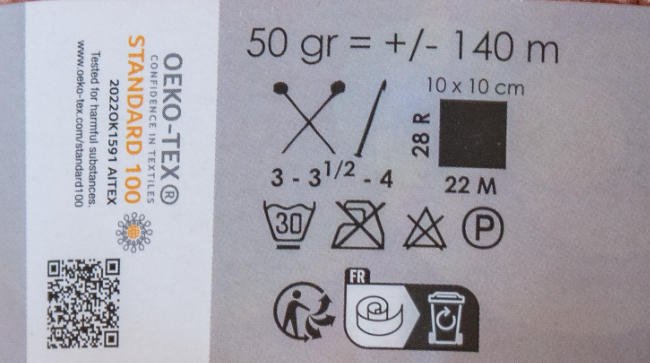
Before you begin, always check the instructions on your yarn label. It usually tells you the crochet hook size Recommended. Sticking to this size is a good start to achieving a result close to that of the model you are following.
For example, in the photo opposite, the black square indicates that for a 10x10cm sample, 22 stitches and 28 rows are required.
2. Create a 12×12 cm test square
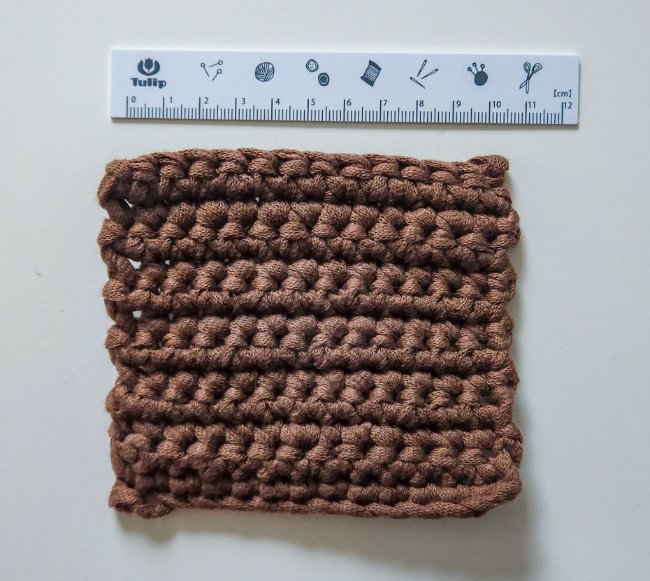
To make your swatch, create a chain slightly larger than 12 cm, then crochet your stitches according to the stitch pattern for your project. Work enough rows to obtain a square of approximately 12 x 12 cm.
For example, if your project involves a double crochet, make a sample in double crochet. The same applies if a bobble stitch is used. Generally, you'll find the gauge instructions at the beginning of your pattern, especially if the stitch used is unusual.
3. Block your sample
If your final project requires a blocking step, perform this step on your test square as well. The blocking allows you to achieve the true final look of your project by relaxing or tightening the stitches as desired. This guarantees you'll get exactly the same size and texture as intended for your final project.
4. Measure and count your stitches
Place your square flat. Since the edges tend to distort slightly, measure precisely 10 cm from the center of your square. Count how many stitches you have within those 10 cm and compare with the instructions for the model.
What if your sample doesn't match the model?
If you find that your sample does not conform to the model, don't panic! Here's what to do:
Sample too large
If your sample size is too large, it generally means that your tension is too loose. Start your swatch again using a smaller hook to tighten your stitches. If the problem persists, try tightening your stitches slightly more as you work.
Sample too small
If, on the other hand, your sample is too small, it's probably because your tension is too tight. Start again with a larger hook to widen your stitches. If necessary, loosen your grip on the yarn a little for better consistency.
Tips for adjusting your tension
Changing your crochet hook is often the solution, but if you're still having trouble, try slightly modifying how you hold your yarn or hook. Even tension is often the result of regular practice. Take the time to do simple exercises like crocheting a few rows regularly to familiarize yourself with the grip that works best for you.
Tips for always making successful samples
Here are a few additional tips to perfectly master the creation of your samples:
• Always make a sample before each project: Even if you think you know your blood pressure, it can vary depending on the thread used or your mood that day.
• Use the same crochet hook and yarn throughout the project: This ensures consistent tension throughout your project.
• Keep track of your samples: Note down the results of your swatches (hook size, number of stitches) somewhere. This can serve as a reference for your future projects.
As you've probably gathered, a crochet swatch isn't a step to be taken lightly. It's an invaluable tool that allows you to accurately predict the final result, save time and yarn, and ensure a flawless finish. So, take a few minutes before each project to make your test square; you'll see, it will quickly become a reassuring habit that will guarantee the success of your crochet creations!
Discover our other articles on crochet:
Selling your crocheted plush toys: everything you need to know about the CE standards to comply with
Want to sell your crocheted plushies, but the terms "CE marking" and "toy directive" make you want to close the tab? I'll explain everything you really need to know: what CE marking actually means, how to tell if your creations are affected, and more…
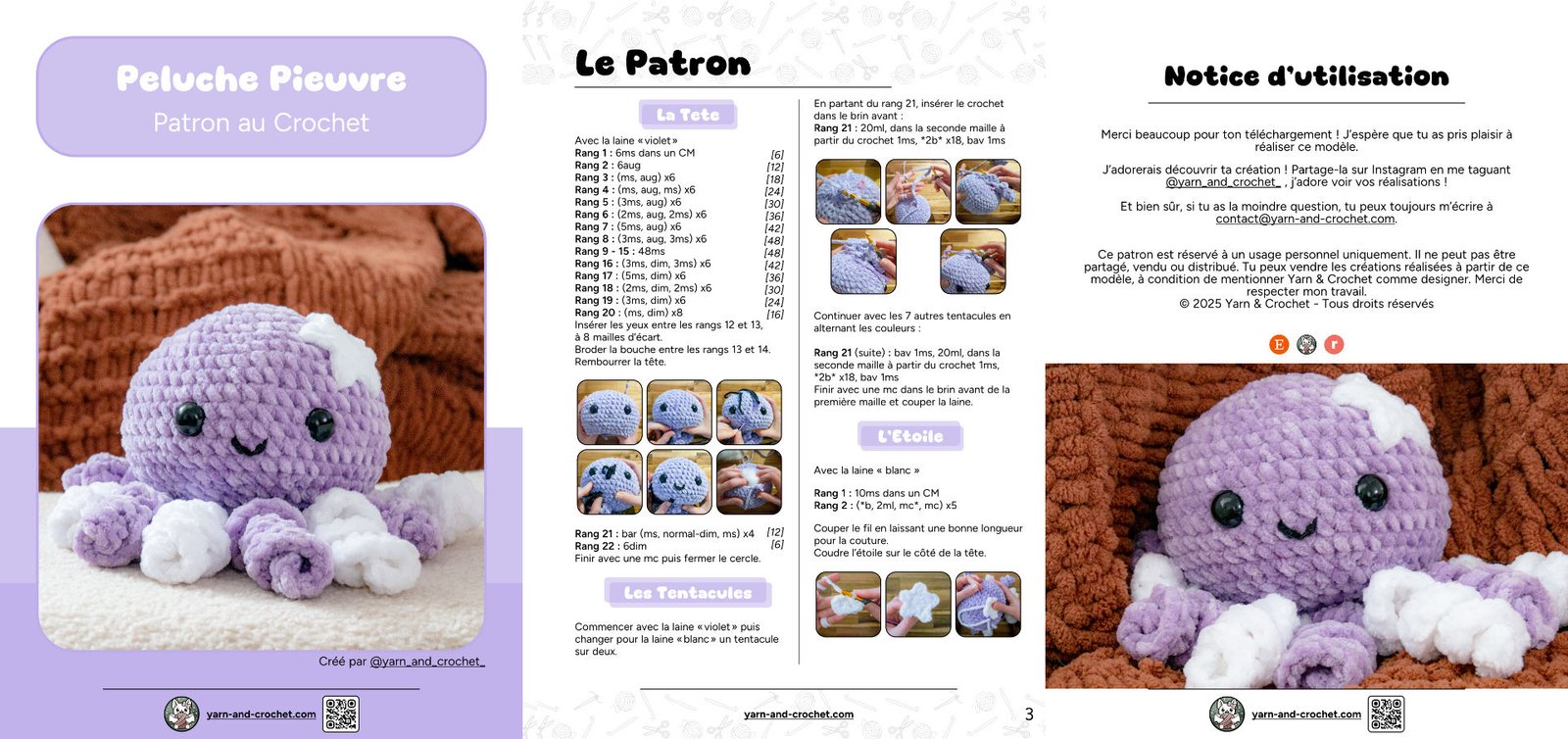
How to Read a Crochet Pattern: A Beginner's Guide
Getting started with crochet involves knowing how to read a pattern. Discover how to easily decode abbreviations, choose your materials, and follow the detailed steps of an illustrated pattern.
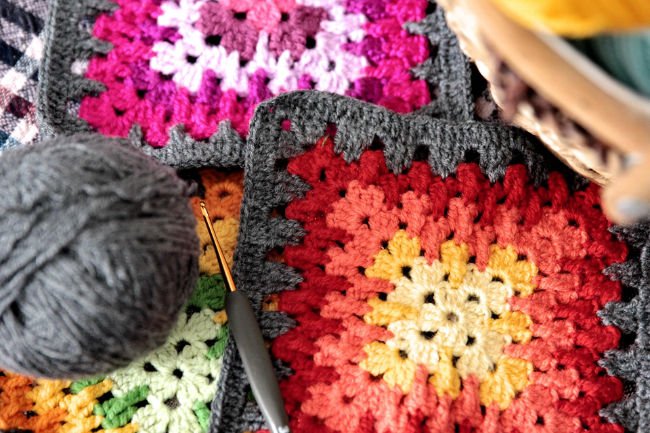
Crochet Granny Squares: The Beginner's Guide
Learn how to crochet granny squares easily: origins, magic circle tutorial, diagram reading and lots of creative project ideas.